

Still a Part of Unity
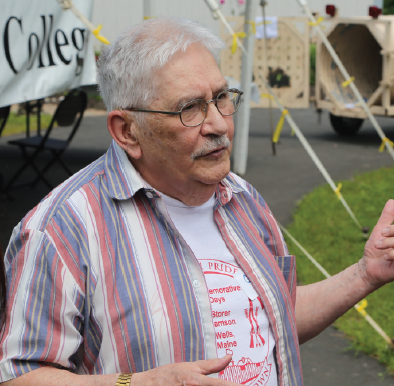
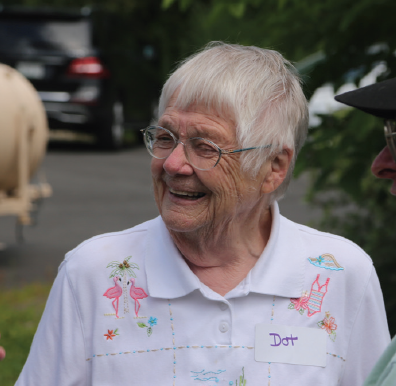
George Fowler and Dorothy “Dot” Quimby have long been part of the fabric of the Unity College story. Because of their history and longtime relationship with the college, we wanted to get their thoughts and reflections.
When did you arrive at Unity College?
George: Before it opened. I was already minister in town. Bert Dittas recruited me to be the Unity chaplain.
Dot: I moved to Unity in 1956, so I was here before the college started. I was taking night classes and summer classes for my master’s in library science and wasn’t quite finished when Bert Clifford recruited me to be the librarian. It was funny because my thesis was on building a reference library and I was lucky enough to have firsthand experience.
What was the college like when you got here?
George: What college? It was a farm!
Dot: The college had been a farm when I got here. I watched them fix up the hatchery and build the buildings. The first library was a big empty room in the academic building with a huge pile of books in the center. We built shelves and some fellow colleges in Maine donated the charge desk and card catalogs and we had a library.
What were some of the differences you noticed in the students over your time at Unity College?
George: Earliest students possessed determination to stick with the college during its beginnings to make the best of their experience. … Today, students are use to more services/supports in place at all colleges, not just Unity.
Dot: The first group of students were mainly from the city – especially New York City. They made Unity Institute into a college. They had to make a lot of things happen themselves, like the radio station and fraternities, but the location was a bit of a culture shock for them. They could walk down the streets of New York City, but the ruralness and how dark it got at night scared them. We all poured our hearts and souls into making Unity succeed and were a very close knit group of students, faculty and staff. We were all a little funky and those from the 60s, 70s, and 80s know what I mean.
What are some of the similarities you noticed in the students over your time at Unity College?
George: Hard workers, committed, passionate …
Dot: I loved our students and I still do. They are so friendly and open. I retired in 2001 and I write to students who have been on campus after I left and it feels like I know them just as well as those that were there while I was working. They show a lot of initiative and go and do things.
What was the biggest change you saw during your time at Unity College?
George: Because I was there right from the beginning, there were huge changes constantly happening. The college went from being a farm to actually having buildings specific to needs of the college (residence halls, gymnasium, etc…).
Dot: I saw lots of changes because I was there so long, but the biggest change I saw is when we became environmental in our curriculum. That’s when we truly found our niche.
What made you the proudest to be a part of Unity College’s 50th year history?
George: When the college finally recognized the earliest alumni and their contributions to the college in relation to the college opening, surviving and growing. Pleased to see the college/alumni relationships “blossoming.”
Dot: The fact that I’ve seen the college come from so little physically to how it looks today makes me very proud. I’m proud to continue to be an ambassador for the college and that we’ve come so far. I know that we all felt proud when a sign that said “Unity College” was put up on (Interstate) 95 … it meant we had arrived.
What do you think the college will be like 50 years from now?
George: Can’t even possibly imagine.
Dot: I think some things will be more mainstream, the campus more beautiful, and all of us will be more unified in spirit. For a long time it seemed like it was us versus them; now it is just us.


