
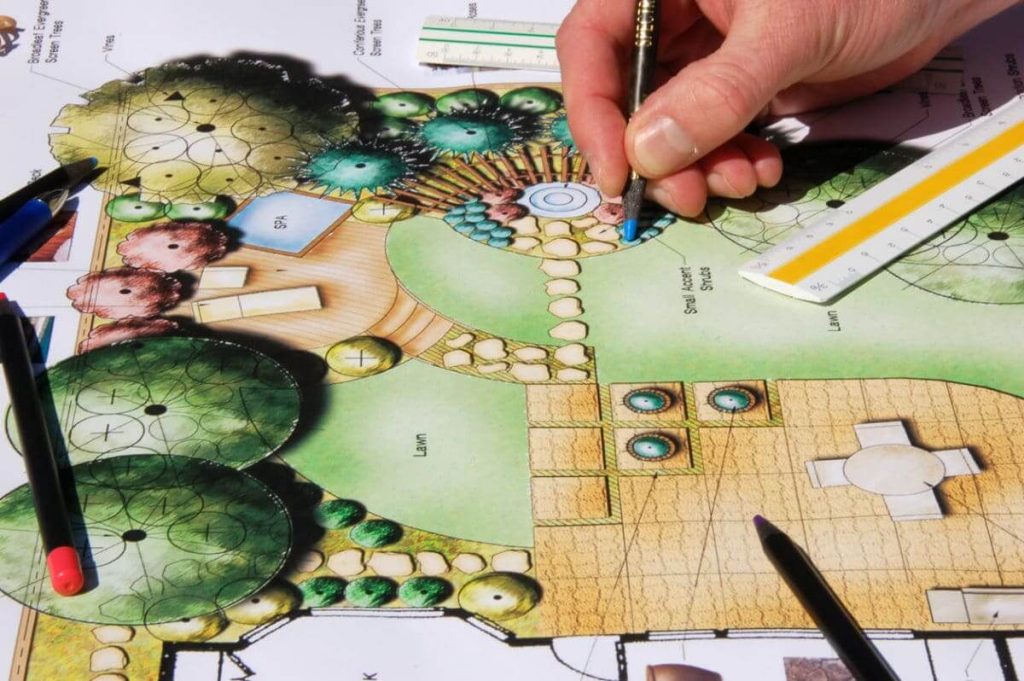
You look at a degraded lot and see what it could become: native plantings that filter stormwater, shade trees positioned to cut summer cooling costs, a productive edge garden where there was only compacted lawn. Landscape design is applied plant science with a spatial dimension. The best designers understand soil, ecology, plant communities, and human needs simultaneously, and they know how to put all of that on paper and in the ground.
What Does a Landscape Designer Do?
Landscape designers plan and specify plant-based outdoor environments for residential, commercial, institutional, and public clients. The role is creative, technical, and client-facing in roughly equal measure.
On a given week, a landscape designer might conduct a site assessment and soil evaluation for a new residential project; develop a planting plan that balances client aesthetics with ecological function; specify plants for a commercial campus renovation; present a design concept to a municipal parks committee; and walk a completed installation with a contractor to verify plant placement. They also research plant material availability, manage project budgets, and stay current on sustainable design practices including stormwater management, pollinator habitat, and climate-adapted plant selection.
The work is more technical than the popular image of garden design suggests. Plant identification, soil literacy, site analysis, and knowledge of regional plant communities are professional baseline expectations. Designers who combine that horticultural depth with design communication skills are the most effective and most sought-after.
A Note on Landscape Architect vs. Landscape Designer
These two titles are often confused, and the distinction matters for career planning.
Landscape Architect is a licensed professional title in all 50 states. Licensure requires a professional degree in landscape architecture (BLA or MLA) from an accredited program, passage of the Landscape Architect Registration Examination (LARE), and documented internship hours. A BS in Sustainable Horticulture does not lead to landscape architect licensure.
Landscape Designer is a non-licensed professional role that does not require a specific degree or state license. Many landscape designers work independently or within design-build firms, focusing on residential and smaller commercial projects. Strong plant knowledge, design skills, and professional certifications are the primary qualifications.
If your long-term goal is licensure as a landscape architect, a BLA or MLA from an accredited program is the required path. If your goal is a design career grounded in plant science and sustainable horticulture, a BS in Sustainable Horticulture is directly applicable.
Where Do Landscape Designers Work?
Landscape design careers exist across a wide range of settings and every U.S. region.
Landscape design-build firms employ designers who develop concepts and oversee installation for residential and commercial clients. Nurseries and garden centers employ designers who consult with customers and develop planting plans as a sales and service function. Landscape management companies employ designers who develop renovation and enhancement plans for maintained properties. Municipal parks and recreation departments employ horticultural designers for public landscape projects. Environmental consulting firms employ planting designers who develop native plant and restoration planting plans for mitigation and habitat projects.
Independent practice is also common in this field. Many landscape designers build client bases in their local markets and work as sole proprietors or small firm principals, particularly in suburban and urban markets with strong demand for sustainable residential design.
Landscape Designer Career Trajectory
The ladder runs: Landscape Technician / Garden Assistant → Junior Landscape Designer → Landscape Designer → Senior Designer / Design Manager → Principal Designer / Firm Owner.
Landscape Technician or Garden Assistant is the entry point. You support installation crews, learn plant material, and assist senior designers with site documentation and drafting.
From there, a Junior Landscape Designer develops design concepts under supervision, manages smaller projects independently, and builds a portfolio. A Landscape Designer leads client projects from site assessment through installation oversight, typically after three to six years of experience.
Senior Designer or Design Manager roles involve managing a project portfolio, mentoring junior staff, and contributing to business development. Principal Designer or Firm Owner represents the senior tier, with full creative and business authority for an independent or small firm practice.
Landscape Designer Salary and Job Outlook
The closest BLS category is landscape architects, with a median annual salary of approximately $73,000 as of 2023. Non-licensed landscape designers typically earn somewhat below that median, though compensation varies significantly by market, employer type, and project scope.
| Career Stage | Typical Annual Salary |
|---|---|
| Landscape Technician / Garden Assistant (entry level) | $30,000 – $44,000 |
| Junior Landscape Designer (early career) | $40,000 – $58,000 |
| Landscape Designer (mid career) | $52,000 – $74,000 |
| Senior Designer / Principal / Firm Owner (senior level) | $68,000 – $110,000+ |
Salaries climb with professional certification, market location (urban and high cost-of-living markets pay more), sustainable design specialization, and independent practice revenue. Designers who combine strong plant knowledge with CAD and landscape design software proficiency are consistently competitive.
Job Outlook: The BLS projects 4% growth for landscape architects through 2033. Demand for sustainable design services, including native planting, green infrastructure, and climate-adapted landscapes, is growing faster than the broader category. Clients and municipalities increasingly require ecological performance alongside aesthetics, which benefits designers with genuine horticultural and ecological knowledge.
Skills You’ll Build at Unity
Unity’s BS in Sustainable Horticulture builds the plant science foundation that sustainable landscape design careers require. The curriculum directly supports the technical plant knowledge that distinguishes credentialed designers from self-taught practitioners.
Organisms that Sustain the Earth: Understanding Plants (BIOL 201) provides the plant biology foundation for understanding how plants grow, how they interact with their environment, and how to select species that will thrive in specific site conditions.
Plant Pathology (BIOL 325) develops diagnostic skills for identifying and managing the disease and stress problems that affect installed landscapes, knowledge that distinguishes designers who can specify plants that perform from those who can only draw planting plans.
Integrated Pest Management (BIOL 330) builds the systematic approach to plant health management that sustainable landscape clients increasingly expect, particularly for organic and reduced-input landscape programs.
Soil Analysis (ESCI 301) develops the soil science literacy that underpins every planting specification decision. Understanding soil chemistry, drainage, and structure is essential for selecting plants that will establish and perform over time.
Climate-Smart Agriculture (HORT 401) frames plant selection and design decisions within climate adaptation realities, preparing designers to select plant material that will be resilient under projected future conditions, not just current ones.
Sustainable Farm Management (SUFA 201) and Starting Your Small Business (MGMT 301) develop the operational and business planning skills that are directly applicable to independent design practice and small firm management.
What Students Say
“I am grateful for the things I have learned at Unity because they have given me the confidence and the knowledge to take steps to achieve my goals!”
Emma W., BS in Sustainable Horticulture
How to Get Started
Landscape design careers reward a portfolio of real projects alongside formal credentials. Both can be built before you hold a professional title.
Pursue the Landscape Industry Certified Technician (LICT) credential from the National Association of Landscape Professionals (NALP). It is an accessible entry-level credential that covers plant identification, installation, and maintenance standards. It signals professional commitment to employers and clients in residential and commercial landscape markets.
For designers focused on sustainable and ecological work, the Ecological Landscape Alliance offers professional development and a Sustainable Landscape Management credential that is recognized in the ecological design community. Additionally, the American Horticultural Society’s Certified Horticulturist credential is broadly recognized and directly applicable for designers whose work is grounded in plant science.
Develop proficiency in landscape design software. SketchUp, AutoCAD LT, and Land F/X are common tools in design-build and professional design practice. Free and student versions are available for most platforms. Building this skill alongside your horticulture coursework makes you immediately more deployable when entering the job market.
Ready to Take the Next Step?
Unity Distance Education’s BS in Sustainable Horticulture is a fully online, 120-credit program designed for working adults. It builds the plant science, soil literacy, climate-smart design, and business management skills that landscape design careers are built on. With up to 8 start dates per year, you can begin when your schedule allows.
Salary data sourced from the U.S. Bureau of Labor Statistics Occupational Outlook Handbook (2024). Unity Environmental University cannot guarantee employment or specific salary outcomes.
