
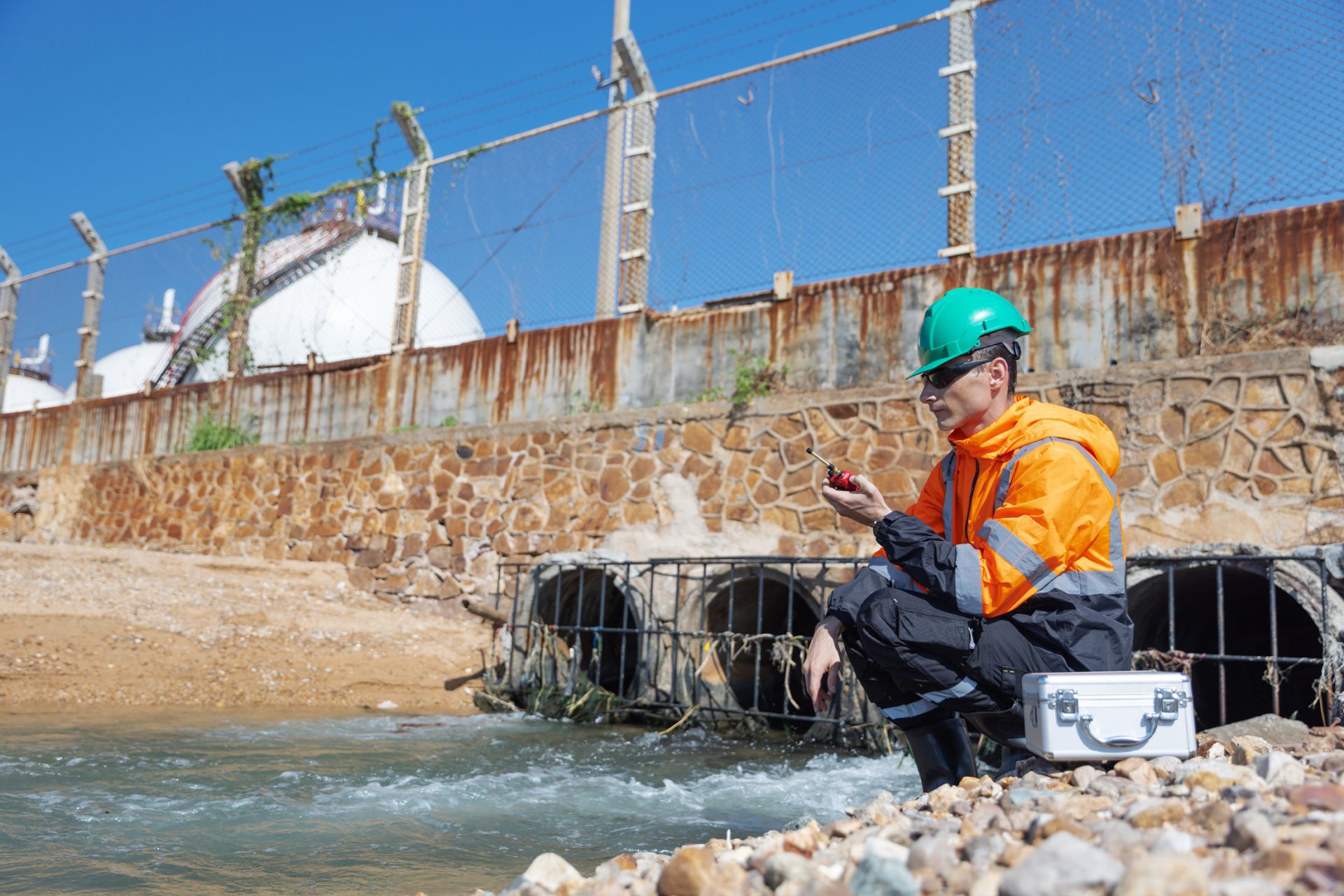
What is an Environmental Engineer?
Engineers are professional problem solvers. Using scientific and mathematical principles, engineers design, build and maintain structures and systems to solve real-world problems. Engineers are creative thinkers; they work to ideate, develop and execute new technologies and systems, identify challenges, analyze them, then find innovative solutions. Looking at engineering through a sustainable lens, we see environmental engineers solving real-world problems in our environment in many ways. Environmental engineers develop systems to protect the environment through things like waste management, water and air quality monitoring, sustainable design practices, remediation of contaminated sites, and the development of clean technologies that minimize environmental impact.
What Education Do You Need to Become an Environmental Engineer?
According to the U.S. Bureau of Labor Statistics, typical environmental engineering jobs require a Bachelor of Science (BS) degree. Students interested in becoming environmental engineers may come from backgrounds with varying exposure to science, technology, engineering, and math (STEM) courses, but must understand that these are fundamental to the role. STEM courses at Unity are taught by experts in their fields and are designed to build the mathematical and scientific foundation necessary for engineering coursework, and eventually, field work. Other important skills required to become an environmental engineer are just as foundational to the job: the ability to communicate your ideas. Art and science classes help engineers use appropriate tools and communicate complicated ideas to others. Communication involves oral and written skills to explain and promote ideas to investors, management, and the public.
How Do Environmental Engineers Solve Real-World Problems?
Your education is designed to ethically practice engineering and protect public health and safety. In a world whose people are as interconnected as we are, our problems also become interconnected. By developing solutions that promote sustainability, environmental engineers design and implement systems to protect public health, manage resources, and mitigate negative environmental impacts. Having a combination of technical expertise, understanding of social and economic factors, and collaboration are fundamental in the field of environmental engineering.
At the 2002 World Summit on Sustainability in Johannesburg, South Africa, world leaders said that your education should “emphasize a holistic, interdisciplinary approach to developing the knowledge and skills needed for a sustainable future as well as changes in values, behavior, and lifestyles.” This requires us to make decisions and act in culturally appropriate and locally relevant ways to develop and evaluate alternative visions of a sustainable future and to fulfill these visions through working creatively with others.
During your journey to become an engineer at Unity, you’ll consider the cost of designs from a business and end-user standpoint to justify decisions about energy, materials, transportation, and other associated costs with manufacturing goods. You’ll also consider the availability and consumption of natural resources and the impact of your design on the environment.
What Does an Environmental Engineer Do?
We see environmental engineers solving real-world problems in our environment in many ways. Environmental Engineers develop systems to protect the environment through things like waste management, water and air quality monitoring, sustainable design practices, remediation of contaminated sites, and the development of clean technologies that minimize environmental impact. According to U.S. News and World Report, out of the top 100 career choices environmental engineering is ranked as #6.
What are Environmental Engineer Salary Expectations?
Median level pay was found to exceed $100,000 per year for environmental engineers in the United States in 2023. The job outlook for 2023–2033 is expected to increase by 7%, which is faster than average. Entry-level salaries for environmental engineers can range from $70,000 to $90,000, according to ZipRecruiter.
How Can I Prepare for an Environmental Engineering Career Now?
Engineering is practiced in teams that design and build complex systems. Professional organizations help spread new knowledge and encourage lifelong learning about new technologies and techniques. You are encouraged to investigate professional organizations to begin your professional networking and to find opportunities for internships and job listings. Most of these organizations offer steeply discounted student membership rates, and they frequently host regional and national job fairs and job boards. A partial listing of environmental engineering professional organizations you might be interested in include:
- Air and Waste Management Association (AWMA)
Nonprofit, nonpartisan professional organization enhancing knowledge and expertise by providing a neutral forum for information exchange.
- American Academy of Environmental Engineers and Scientists (AAEES)
The American Academy of Environmental Engineers and Scientists® is a not-for-profit 501(c)(6) organization serving the Environmental Engineering and Environmental Science professions by providing Board Certification to those who qualify through experience and testing.
- Association of Climate Change Officers (ACCO)
ACCO is the premier professional development organization and cross-sector community of practice for individuals addressing climate change in their organizations’ operations and mission.
- American Society for Engineering Education (ASEE)
The American Society for Engineering Education is a nonprofit organization of individuals and institutions committed to furthering education in engineering and engineering technology.
- American Society of Civil Engineers (ASCE)
The American Society of Civil Engineers (ASCE) represents more than 147,000 members of the civil engineering profession worldwide and is America’s oldest national engineering society.
- American Solar Energy Society (ASES)
The American Solar Energy Society (ASES) is a 501(c)(3) non-profit that advocates for sustainable living and 100% renewable energy.
- American Water Works Association (AWWA)
AWWA is the authoritative resource on safe water, with more than 60,000 members worldwide sharing knowledge on water resource development, water and wastewater treatment technology, water storage and distribution, and utility management and operations.
- Association of Environmental Engineering and Science Professors (AEESP)
The Association of Environmental Engineering and Science Professors is made up of professors in academic programs throughout the world who provide education in the sciences and technologies of environmental protection.
- Engineers Without Borders – International (EWB-I)
Engineers Without Borders facilitates collaboration between humanitarian organizations in various countries around the world that partner with disadvantaged communities to improve their quality of life through education and implementation of sustainable engineering projects, while promoting new dimensions of experience for engineers, engineering students, and similarly motivated non-engineers.
- International Society of Sustainability Professionals (ISSP)
The premier professional association for members of the sustainability field, ISSP is committed to the UN’s Sustainable Development Goals (SDGs).
- International Water Association (IWA)
IWA is comprised of leading water professionals in science, research, technology and practice.
- Solid Waste Association of North America (SWANA)
SWANA is a leading organization for professionals in the field of solid waste.
- Tau Chi Alpha (TXA)
TXA is an Environmental Engineering Honor Society.
- Water Environment Federation (WEF)
The Water Environment Federation is a not-for-profit association that provides technical education and training for thousands of water quality professionals who clean water and return it safely to the environment.
