
Food Systems Director
Lead city, nonprofit, or institutional programs for sustainable food access.

View Jordan’s Full Quote“…with (Unity) being totally online, it helps create flexibility for my schedule.”



 Unity’s online programs are trusted by over 10,000 students across all 50 states.
Sustainable Food Systems involve eco-friendly practices like organic farming, mitigating environmental damage, and promoting social equity.
This graduate degree prepares you to lead the transition toward environmentally sustainable, socially equitable, and resilient food systems. You’ll explore organic farming, regenerative agriculture, and food policy reform through an interdisciplinary lens spanning environmental science, economics, and social science, learning to design strategies that promote equity and resilience across food production, distribution, and consumption. Graduates go on to careers in sustainable agriculture, food policy, community-supported agriculture, and environmental advocacy.
Your online education should be affordable and manageable. Thanks to our promise to keep tuition flat through 2030, you won’t be burdened with unexpected increases or fees.
Our team of distance education concierges will work with you through the admissions process to help you plan and pay for your degree. Learn more about the costs here.
The timeframe for completion is up to you! Enroll in 6 credits per term and complete the program within just one year. Alternatively, opt for part-time study by taking one course at a time. Whichever path you choose, we’re here to support your educational journey every step of the way. Contact your concierge or advisor to create your personalized plan.
Professional Masters Core: 15 credits
Major Program Core: 15 credits
For course requirements and a better look into your program, view our full course catalog. Then apply online for free to get started.
The Master of Professional Science (MPS) is a graduate degree designed to combine scientific knowledge with practical skills relevant to the workforce. Unlike traditional science degrees, the MPS emphasizes hands-on experience and professional development, preparing students for careers that require both expertise in science and the ability to apply that knowledge in real-world contexts. MPS programs focus on a range of skills that are directly applicable to the workplace:
The MS degree is a traditional graduate program focused on deepening scientific understanding through research and academic study.

This course explores the transition to sustainable food systems—from production to consumption—covering supply chains, food security, justice, waste, and policy, developing systems thinking through case studies and group projects.
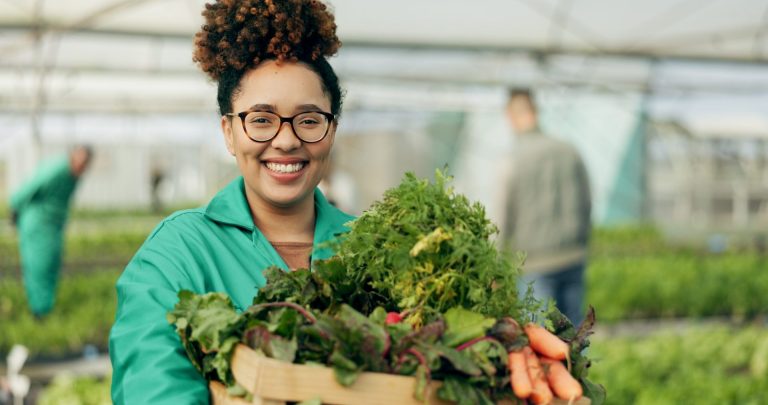
This course guides you through sustainable food production—from vertical gardens to marine food production—analyzing the interplay between production systems and resource management, with a focus on food security, biodiversity, and climate resilience.

This course explores the influence of policy on sustainable food systems—international, national, and local regulations covering finance, trade, land use, safety, and labeling—and builds skills to advocate for policy change through case studies and analysis.

Learn from Leaders
More InfoEdD in Leadership and Innovation, MEd in Educational Leadership, BA in Government and Leadership

Learn from LeadersLearn More About Professor Mpanga

Learn from LeadersMore InfoDoctorate in Educational Leadership and Higher Education at the University of Nebraska




Balance life, work, and education by studying when and where you want.

Nationally recognized educational quality at an affordable price.

Up to 5 terms each year let you take breaks without affecting financial aid.

Ranked in the top 1% of universities nationwide by the Social Mobility Index.

Fast-track your Master’s degree and finish your program in as little as one year.

Dedicated to turning career and academic aspirations into tangible achievements.

Connect with experts who’ve built real careers in the field.

Focused on sustainable practices for an environmentally aware future.
