Conservation is often discussed in terms of international policy, population trends, and long-term strategy. But conservation is also immediate and embodied. It is personal. It happens in moments that matter. Reverse the Red asks us to recognize that species recovery does not happen through one approach alone, but through layers of effort happening at once.
The Urgency of Endangered Species Protection
Much of my early conservation work focused on West African chimpanzees, a critically endangered subspecies listed on the IUCN Red List. Chimpanzees are more than a species at risk. They are a window into our world, into our relationships, our feelings, our ways of communicating, and even how we raise our children. They tell us about ourselves. They reveal continuity rather than distance between humans and the rest of the natural world.
Working with chimpanzees and with other great apes, like the orangutans and gorilla I worked with at the Houston Zoo, never felt like working with animals. It felt like working with colleagues: thoughtful, intentional, often funny, sometimes stubborn, deeply social beings with distinct personalities. It’s difficult to imagine a world without them. And yet that is the trajectory we are on if current trends continue. West African chimpanzees declined by 80 percent between 1990 and 2014, and orangutan populations are not increasing in the wild.
Conservation Embodied
One moment from my time working at a chimpanzee sanctuary has never left me. A chimpanzee needed emergency, life-saving surgery. We had expert veterinary staff but no high-tech hospital equipment. No heart monitor. No automated alarms. I was the monitor.
My job was to feel his wrist, count his heartbeat, watch his chest, and count his breaths. Too fast, and he was waking up. Too slow, and we risked losing him. In that moment, conservation was not abstract or strategic. It was immediate and embodied. It was about keeping one individual alive because he mattered.
That moment sits alongside everything else conservation requires: international policy, protected areas, community partnerships, veterinary care, research, education, funding, and yes, sometimes a single person paying attention when it matters most.
This is what species recovery demands. It happens through layers of effort, from the intensely personal to the globally coordinated. Wildlife veterinarians. Community-led conservation. Local land trusts. Social campaigns. Donations from people who can give. Every step counts, because all of it is needed.
Bringing Conservation Home
These days, I spend far less time in West Africa and most of my time in southern Maine. My opportunities for conservation now look different, but they are no less real. They show up close to home, in familiar places.
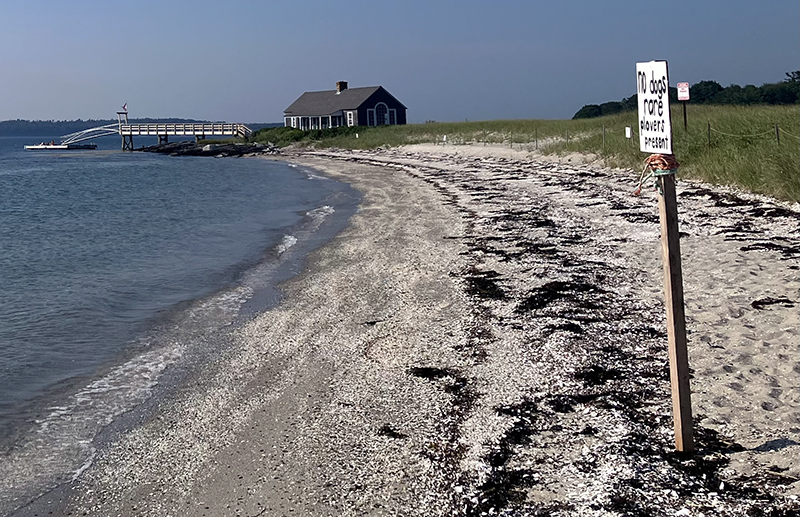
When warming spring rains trigger mass amphibian migrations, I help endangered salamanders cross the road on The Big Night, an initiative started by a Unity alum. Throughout the year, I work with the Chebeague and Cumberland Land Trust to conserve forests and coastal land, including beaches that host piping plovers. The survival of these small, beach-nesting shorebirds depend on finding just the right stretch of sandy shoreline to nest, raise their chicks, and return year after year.
Protecting Piping Plovers Through Local Land Conservation
This past summer, I had the chance to visit a nesting site on Chebeague Island off the coast of Maine. I watched several young plovers dart across the beach, nearly invisible against the sand until they moved. Their camouflage is remarkable, and part of what makes them so vulnerable. A careless step, an off-leash dog, or a single high-traffic season can undo an entire breeding effort.
The Land Trust works to protect these nesting beaches so that plovers can return year after year, and this past season set a record high for breeding pairs on islands like Chebeague, proof that careful protection really can tip the balance toward recovery.
Local Conservation is Global Conservation
This kind of work, local, persistent, and deeply relational, is mirrored around the world.
In Kenya, Peter Lalampa and the Grevy’s Zebra Trust work alongside pastoralist communities to conserve Grevy’s zebras by strengthening local leadership, livelihoods, and coexistence strategies. In northern Kenya, Shivani Bhalla and Ewaso Lions focus on conserving lions and other large carnivores, where success depends on the involvement of communities living alongside wildlife.
In Malaysian Borneo, Nurzhafarina binti Othman works to protect Bornean elephants by addressing habitat fragmentation and human-elephant conflict through community engagement, policy work, and long-term monitoring.
Conservation Success Requires Action
Whether protecting a single nesting beach in Maine or conserving wide-ranging species across continents, these efforts reflect what Reverse the Red asks us to see. Species recover because people show up, again and again, at every scale.
Conservation is not one thing. It is many things, happening simultaneously. It is emergency veterinary care and international policy. It is community trust and local land protection. It is attention, commitment, and the belief that our actions still matter.
Join the Conservation Movement
At Unity Environmental University, students learn to turn care into action. Through applied learning, partnerships, and career-focused programs, Unity prepares environmental professionals to make a real difference.
This blog was written by Dr. Kelly Boyer Ontl, Dean of Graduate Studies with the assistance of AI language model ChatGPT (OpenAI, 2026) to refine optimization of this work. Photos by the author.