
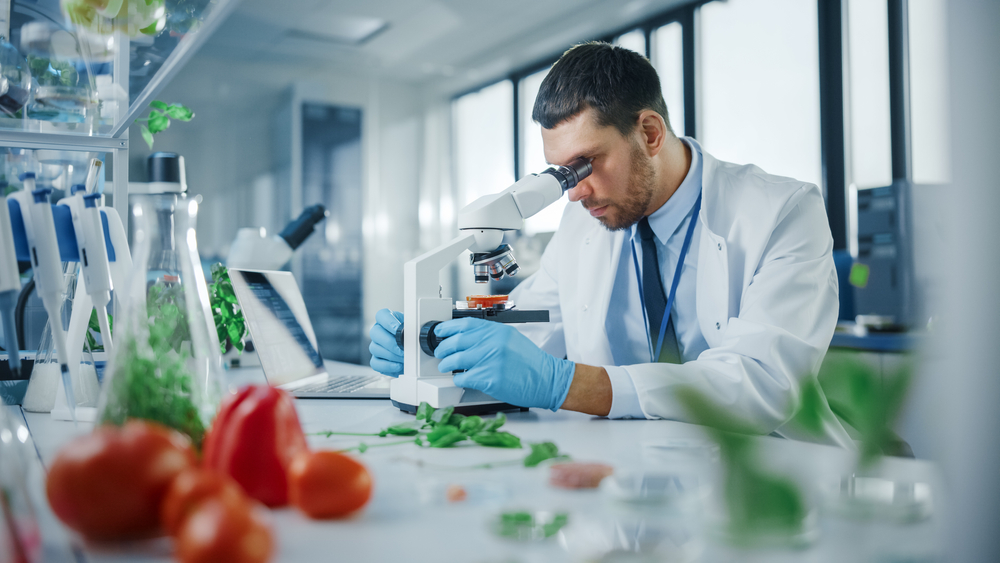
Food production in the modern era involves more than simply creating new food products and distributing those products to target market segments. In fact, the food production industry relies heavily on food science to make sure that products are safe, nutritious, and delicious. In addition, scientists and organizational leaders work together in hopes of making food processing as equitable and accessible as possible. This ensures that people can enjoy fresh, high-quality, and affordable food products.
If you are passionate about food production, sustainability, and food safety, then now is the right time to consider a career as a food scientist. This guide will help you learn more about the food science field and how to become a food scientist.
What Is a Food Scientist?
Food scientists study all nutritional aspects of food, including food safety, nutrition, food production processes, and more. According to the United States Bureau of Labor Statistics (BLS), food scientists create and implement research projects that focus primarily on ways to make food production processes more efficient and ways to improve food safety overall. They often perform research and testing to develop new ways to process, protect, and transport food. The results of their research can be used by farmers and food industry leaders to improve food production processes and create food products that are safe, delicious, and affordable.
What Does a Food Scientist Do?
Food science is a field that blends chemistry and biology to uncover ways to improve food safety and enhance food products. As a result, food scientists and food technologists may work in the field, in laboratory settings, or in office settings. The BLS further clarifies some of the most common job responsibilities of food scientists, including:
- Designing and conducting experiments to improve food safety, sustainability, and crop output.
- Creating and developing new products with an emphasis on quality and safety.
- Developing new and innovative ways to process, package, and transport food, with an emphasis on equity and accessibility.
- Ensuring that food production facilities remain in regulatory compliance.
- Communicating relevant information about research findings to other researchers in the scientific community, business leaders, and farmers.
Essential Skills for Food Scientists
To succeed as a food scientist, you will want to focus on developing the niche skills required for this field. Those interested in becoming a food scientist will need to earn a bachelor’s degree in a relevant field. By choosing a bachelor’s degree program that offers coursework rooted in biology, chemistry, and botany, you can develop a foundation you can build upon. In many cases, employers are looking for food scientists who have completed field-specific coursework, such as food engineering, food chemistry, and food analysis, so it may be beneficial to choose a bachelor’s degree program that focuses on food study.
In addition to earning an undergraduate degree program and acquiring the foundational knowledge required for this field, you will want to focus on honing the core skills required for most food scientist positions. Some essential skills that food scientists need to have include:
- Advanced scientific knowledge with a strong foundation in biology and chemistry.
- Analytical and problem-solving skills.
- Qualitative and quantitative research skills.
- Attention to detail and organizational skills.
- Extensive industry and regulatory knowledge.
- Communication, teamwork, and observational skills.
Career Paths in Food Science
On the surface, food science may seem like a highly specific field with limited career opportunities. However, the demand for safe and high-quality food products ensures that you can take various career paths in the food science field. Food scientists work in a variety of industries, including agriculture, research, government, and the private sector.
These are some of the food science careers that you can consider:
- Food Scientist — A food scientist is a researcher who conducts experiments to improve food safety, nutritional quality, or food production processes.
- Food Technologist — A food technologist is a food scientist who focuses specifically on food sources. They often work to identify the biological, physical, and chemical properties of food to develop new ways to improve food production processes and food quality.
- Food Safety Specialist — A food safety specialist works directly with agricultural producers and manufacturers to ensure that all safety measures are implemented and that all regulatory guidelines have been met.
- Food Product Developer — A food product developer is a food scientist who works to create innovative new food products with an emphasis on nutritional quality, sustainability, and safety.
- Quality Assurance Manager — A quality assurance manager typically works for a food production company, and they are responsible for creating, implementing, and monitoring safety standards for the organization to ensure that all products are of the highest possible quality.
- Food Production Manager — A food production manager is a food professional responsible for overseeing the manufacturing and packaging processes at companies that create and sell food products. In addition to maximizing efficiency at the organization, food production managers also work to ensure that all regulatory guidelines are met during the production process.
- Food Packaging Engineer — A food packaging engineer is responsible for creating innovative packaging that protects the integrity of the food product. They often work to create packaging materials that are not only durable, but also sustainable.
Salary and Job Outlook for Food Scientists
At a time when the need for high-quality, accessible food products has never been greater, there is significant demand for passionate and experienced food scientists. Some emerging trends currently impacting the food science industry include the demand for alternative proteins, the need for increased sustainability, and the desire for food technology innovations that will improve food safety and quality.
The job outlook for food scientists is positive. The BLS anticipates that there will be an 8 percent growth in employment in the food science industry between 2023 and 2033, with about 3,100 new jobs expected each year over the course of the next decade. The median annual salary for food scientists is about $76,000 per year, though the earning potential for this field can vary based on your credentials, your career path, and your overall experience.
Learn How to Become a Food Scientist at Unity Environmental University
Suppose you want to learn more about how to become a food scientist. In that case, you will find that the robust and supportive online learning programs at Unity Environmental University are the perfect option. At Unity Environmental University, we offer an applied bachelor’s degree program in the area of food study, Applied Bachelor’s in Culinary Innovation and Food Systems. In addition, we offer a Master of Professional Science in Sustainable Food Systems, appealing to students who want to pursue an advanced education in the area of food science.
All of our food science degree programs are designed to equip students with the practical, technical, and scientific skills required to pursue a career in food science or food safety.


