
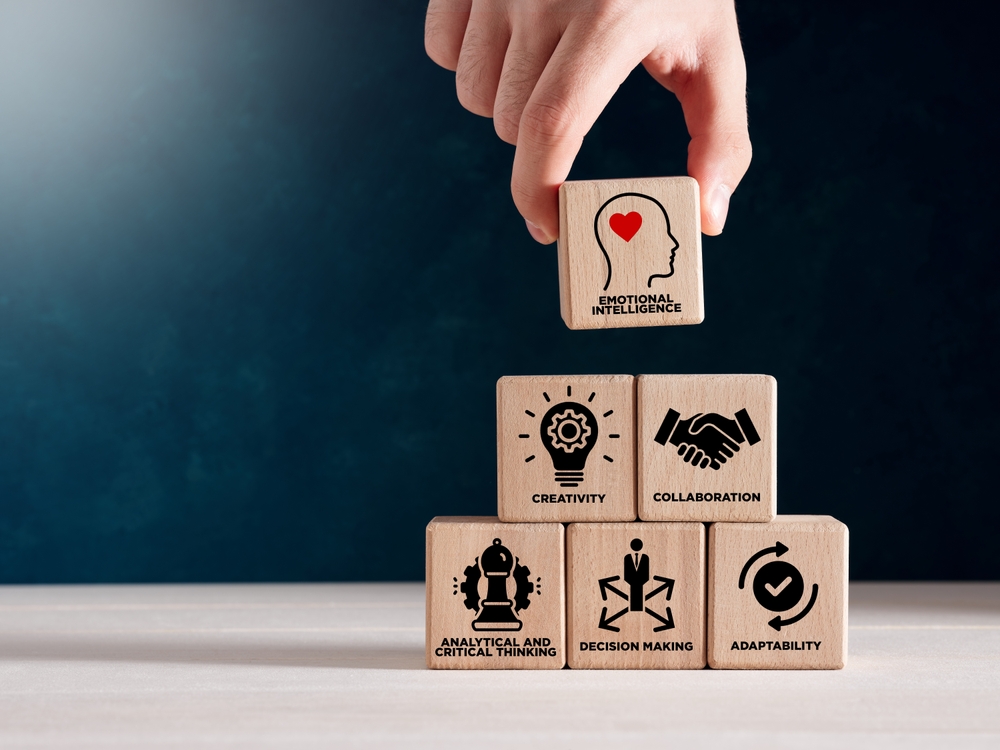
Within any industry, practical and technical skills are required for professional success. An environmental scientist, for example, needs to know how to collect field samples, analyze data, and compile reports. In addition to developing the core skills for a specific field, aspiring professionals should focus on interpersonal skill development. Commonly referred to as soft skills, these competencies are becoming ever more essential to professional success.
What Are Soft Skills, and Why Are They Important?
Soft skills are personality attributes and character traits that allow people to work effectively with others. According to the United States Department of Labor, they are highly valued by employers in today’s economy because they enable collaboration, communication, and adaptability in the workplace. Because these skills are transferable across industries, every aspiring professional should prioritize soft skills development throughout their education and career training.
Examples of soft skills include:
- Communication
- Collaboration
- Creative thinking
- Critical thinking
- Resilience
- Flexibility and adaptability
- Problem-solving
Even though soft skills can be applied in nearly every academic and professional setting, they do not replace the hard or technical skills required for your field. Instead, they complement them and help you stand out in a competitive job market.
Soft skills are key to success in today’s complex economy. By learning how to develop soft skills, you will be able to create stronger relationships, expand your professional network, and become more confident in both academic and professional environments. Soft skills also play a pivotal part in leadership development, allowing you to invest in yourself and continue to advance throughout your career.
The Role of Soft Skills in College Success
Learning how to improve soft skills is integral to professional success, but you will rely heavily on your soft skills throughout your academic experience as well.
According to the American Psychological Association, college students who prioritize soft skills training are able to develop the character traits and behaviors necessary to develop relationships, overcome challenges, and adapt to new environments. Actively working to develop your soft skills during college, you will be better equipped to:
- Communicate effectively with professors and advisors. You need to feel comfortable reaching out to these individuals for support, as this will enable you to overcome hurdles you face and learn how to flourish academically in the college setting.
- Manage your time and complete assignments on schedule. When completing coursework required for your degree, you must be self-motivated and monitor due dates, deadlines, and exam requirements.
- Adapt to new settings and new people. Whether in an online or in-person program, remaining adaptable and flexible helps you move outside your comfort zone and become a more confident, resilient student.
Through challenging yourself and exposure to new experiences in college, you can begin to organically develop the soft skills needed for both personal and professional success.
Why Employers Prioritize Soft Skills
In recent years, employers across all industries have come to realize that soft skills are often more valuable than hard skills. While anyone can learn the practical and technical skills required for a specific position, not everyone possesses the interpersonal abilities needed to generate innovative ideas, resolve issues, and build positive workplace relationships.
According to the U.S. Department of Labor, employers prioritize soft skills during the hiring process because they want to:
- Invest in employees who bring both enthusiasm and reliability. These employees are more likely to stay productive, communicate clearly, and contribute positively to workplace culture.
- Hire valuable team members. Employers are confident in hiring individuals who demonstrate strong communication, adaptability, and collaboration skills.
- Promote employees who show emotional intelligence. Workers who think critically and creatively when resolving issues are often strong candidates for leadership roles.
Knowing not only how to develop soft skills but also promote those skills on your resume could give you an advantage in a competitive job market.
How to Improve Soft Skills
Hard skills are often taught through courses and training programs, but soft skills are honed over time through practice, reflection, and feedback.
Before you begin focusing on soft skills training, start by reflecting on your personal strengths and weaknesses. Consider how you are as a communicator: Do you practice active listening? Are you responsive when others reach out to you?
According to Indeed, these are some additional ways you can develop your soft skills:
- Solicit feedback from those you work with. If you are in college, ask professors or advisors where you could improve. If you’re working, ask a supervisor or coworker for constructive feedback on collaboration, communication, or problem-solving.
- Seek out opportunities at work. Take on new responsibilities in your workplace, volunteer for projects, or mentor newer team members. These experiences help you practice leadership, adaptability, and communication in real-world settings.
- Use reflection strategies. Journaling about challenges you’ve faced, keeping notes on interactions with peers or supervisors, or setting aside time each week for self-assessment can help you track growth in your soft skills.
Unlike learning how to use a new piece of technology or perfecting a practical skill, there is no timeline or deadline for soft skills training. Soft skills development will likely be an ongoing process throughout your career (and life in general).
Incorporating Soft Skills Development Into Your Daily Routine
Intentionally weaving soft skills development into your daily routine helps you continue to hone these skills over time. For example, you can practice active listening each day by paraphrasing what you’ve heard or writing about meaningful conversations in a journal.
Additionally, take time to reflect on your day: Did you communicate clearly? Did you stay adaptable when plans shifted? Building in these reflection practices makes soft skills development part of your daily life, not just an abstract goal.
Skill Development at Unity Environmental University
Soft skills training is a crucial component of the educational experience, equipping students with the core competencies necessary to navigate professional environments and advance to higher-level positions throughout their careers. The online degree programs offered through Unity Environmental University Distance Education emphasize critical thinking, problem-solving, and adaptability—skills our students use to drive change in their communities and careers.
For students especially interested in the psychology of human behavior, communication, and growth, Unity’s online psychology degree programs provide an excellent foundation. With a curriculum designed to build both technical knowledge and transferable soft skills, these programs prepare students for a wide range of career paths.
Our Distance Education programs also include career service support to ensure students have access to resources that help them thrive after graduation.
Chat with Una about our online environmental and psychology programs programs or apply today.


