
Wildlife Manager
Oversee wildlife populations and habitats to sustain healthy ecosystems.

View Hunter’s Full Story“Unity surprised me the most with its 5-week class format, supportive instructors, and affordability. While we often consider online classes a go-at-your-own-pace option, Unity is structured differently, and I excel with structured but fast-paced courses.”

View Abigail’s Full Quote“I always had a team that was helping me. And because of that, I feel I was able to thrive.”


 Unity’s online programs are trusted by over 10,000 students across all 50 states.
Wildlife conservation is the practice of protecting and preserving biodiversity by ensuring the survival of various species and their habitats. This field involves a blend of ecology, biology, and environmental science to address issues like habitat destruction, climate change, and poaching. Professionals in wildlife conservation work on projects related to habitat restoration, wildlife management, and endangered species recovery.
At Unity Environmental University, our wildlife conservation program equips students with the knowledge and skills to tackle these critical challenges. You’ll learn about ecosystem dynamics, species behavior, and conservation strategies while gaining applied experience through fieldwork and research projects. Graduates are prepared for careers in wildlife management, environmental policy, conservation education, and research. By promoting sustainable practices and policies, you can play a pivotal role in preserving our planet’s biodiversity for future generations.
The BS in Wildlife Conservation degree enables students to work effectively as wildlife biologists, managers, and ecologists for government agencies, environmental nonprofits, and environmental consulting businesses. This program emphasizes sustainable management of wildlife species through consideration of the applicable social, economic, and environmental concepts. This program also prepares students with a sound understanding of modern environmental issues and the professional skills needed for effective functioning in modern natural resource organizations.
Your education should be affordable and manageable. Thanks to our promise to keep tuition flat through 2030, you won’t be burdened with unexpected increases or fees. Our team of distance education concierges will work with you through the enrollment process to help you plan and pay for your degree. Learn more about the costs here.
Our comprehensive 120-credit program can be tailored to fit your schedule and goals! Completion time depends on the number of credits you choose to take each term (8 terms/year) and less time with transfer credits. Without transfer credits, you can anticipate the following completion times:
General Education Core: 34 credits
Environmental Professional Core: 14 credits
Elective Courses: 39 credits
Program Core: 33 credits
For course requirements and a better look into your program, view our full course catalog. Then apply online for free to get started.
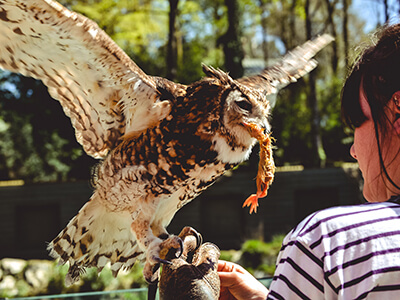
Examine how wildlife managers use habitat to influence species, including habitat components and how species identify, select, and interact with them.
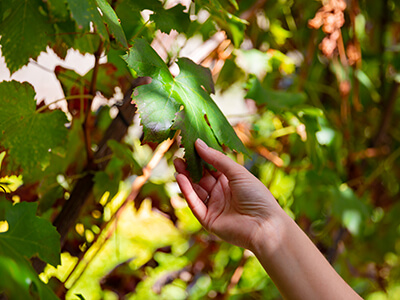
In this course you will be exploring how plant-animal interactions help maintain ecological balance, shape ecosystems, and form the backbone of wildlife habitat.
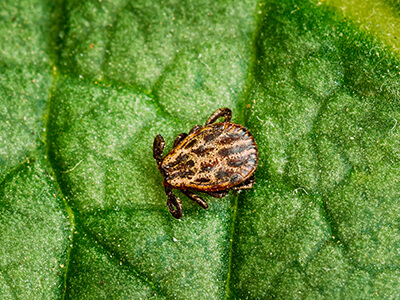
Learn the basic taxonomy and life history of insects, as well as explore case studies involving the role of insects their impacts on human and wildlife health.

Learn from Leaders
Learn More About Dr. MartinPh.D. and M.S. in Biology and a B.A. in Biology

Learn from LeadersMore InfoPhD in Integrative and Evolutionary Biology



Balance life, work, and education by studying when and where you want.

Accepting up to 90 transfer credits to graduate sooner and save money.

Up to 8 terms each year let you take breaks without affecting financial aid.

Ranked in the top 1% of universities nationwide by the Social Mobility Index.

Nationally recognized educational quality at an affordable price.

Dedicated to turning career and academic aspirations into tangible achievements.

Connect with experts who share your passion for working in the animal industry.

Focused on sustainable practices for an environmentally aware future.
