What would it take to spend your working days tracking wildlife, testing streams, or managing the land you grew up exploring? For most careers in nature, the answer starts with the right degree. These jobs reward people who love being outdoors, but they also require real scientific training: understanding how ecosystems work, collecting and interpreting data, and turning what you find into decisions that protect land, water, and wildlife.
That’s why choosing among nature degrees matters as much as choosing the career itself. The degree you pick shapes which roles you can step into, how quickly you can advance, and what you’ll earn along the way. At Unity Environmental University, the Bachelor of Science in Wildlife Conservation is one of several programs built around exactly these careers, combining the science of wildlife and habitats with the field and analysis skills employers look for.
Knowing what each career involves, what it pays, and which degree leads there can help you plan a path that fits the work you want to do.
Why Consider Careers in Nature?
Careers in nature rarely look like a typical desk job. Depending on the role, a single week might include:
- Collecting water samples from a river or stream
- Surveying a wildlife population in the field
- Inspecting a construction or industrial site
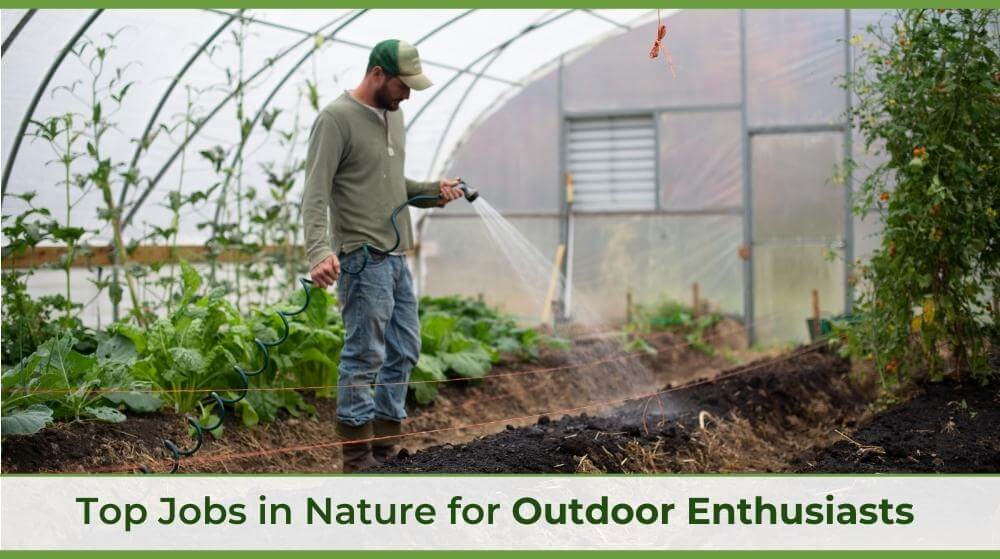
- Managing crops, soil, or a restoration project
Most of these roles balance that fieldwork with time back at a desk analyzing data and writing reports. The mix suits people who want their work to have visible results, whether that’s a restored wetland, a healthier herd, or cleaner water downstream.
These fields also offer steady opportunity for people with the right training. The U.S. Bureau of Labor Statistics (BLS) projects that employment in life, physical, and social science occupations will grow much faster than average from 2025 to 2035, with about 141,900 openings a year across the group. Many of the careers below fall within that group, and if you’re drawn to working with animals specifically, our list of careers with animals that pay well covers even more options.

8 Careers in Nature That Pay Well
Pay in nature careers varies widely, and it tends to rise with the level of education a role requires. The table below compares eight of the best-paying outdoor careers, using the most recent BLS wage data, ordered from highest to lowest median pay:
| Career | Median Annual Pay (May 2025) | Typical Entry-Level Education |
| Environmental Engineer | $107,110 | Bachelor’s degree |
| Sustainable Farm Manager | $89,900* | High school diploma and 5+ years of experience |
| Environmental Consultant | $82,220** | Bachelor’s degree |
| Sustainability Manager | $82,220** | Bachelor’s degree |
| Botanist | $81,970 | Bachelor’s degree |
| Wildlife Biologist | $76,780 | Bachelor’s degree |
| Park Ranger | $73,920 | Bachelor’s degree |
| Environmental Science and Protection Technician | $55,090 | Associate degree |
*Farmers, ranchers, and other agricultural managers. Excludes self-employed workers, who make up most of the occupation. **BLS reports environmental consultants and sustainability managers under the same category, environmental scientists and specialists. Source: U.S. Bureau of Labor Statistics (BLS), Occupational Outlook Handbook
Environmental Engineer
Environmental engineers design the systems that protect people and ecosystems from pollution, from water treatment plants to air quality controls and contaminated-site cleanups. It’s the highest-paying career on this list: environmental engineers earned a median of $107,110 in May 2025.
Most environmental engineers start with a bachelor’s degree in environmental engineering or a related field, where coursework in air and water quality, waste management, and pollution remediation builds the foundation for the job.
Sustainable Farm Manager
Sustainable farm managers run the day-to-day operations of farms, greenhouses, and nurseries, balancing soil health, crop planning, and water use with budgets, staffing, and sales. Some oversee operations for owners or organizations, while others manage their own farms. Farmers, ranchers, and other agricultural managers took home a median of $89,900 in May 2025, though that figure leaves out self-employed farmers, whose income varies with weather and crop prices.
As farm management grows more complex, a degree in sustainable horticulture or agriculture builds the plant science and business planning that keep an operation productive. The same skills lead to roles such as farm and ranch manager.
Environmental Consultant
Environmental consultants help businesses, developers, and agencies understand and reduce their environmental impact, from assessing sites before construction to reviewing regulatory compliance. The role mixes fieldwork with client meetings and report writing. BLS groups consultants with environmental scientists and specialists, a category with a median wage of $82,220 in May 2025.
Most consultants start with a bachelor’s degree in an environmental field. An environmental studies degree is a strong starting point, combining environmental science with the policy and communication skills consultants rely on.
Sustainability Manager
Sustainability managers lead an organization’s efforts to use resources more efficiently, from cutting energy and water use to reducing waste. The role leans toward the office, with site visits to see programs in action. Because BLS reports it under environmental scientists and specialists, it shares the same $82,220 median as consultants.
Because the job means translating environmental data into business decisions, employers look for candidates who understand both. An environmental studies degree builds that range, pairing environmental science with the policy, planning, and communication skills needed to get different teams behind a sustainability plan.
Botanist
Botanists study how plants grow, reproduce, and respond to disease, climate, and changing habitats. Some work mostly in the field surveying plant communities, while others work in labs, botanical gardens, or agricultural companies. BLS counts plant scientists among agricultural and food scientists, who earned a median of $81,970 in May 2025.
The most direct route is a bachelor’s degree in plant science, botany, or horticulture, though programs in wildlife conservation or environmental science can also lead there, especially for botanists focused on habitat restoration.
Wildlife Biologist
Wildlife biologists study animals in their natural habitats, tracking populations, behavior, and threats, then analyze that data to guide conservation decisions. They work for government agencies, conservation organizations, and universities, and BLS puts the median wage for zoologists and wildlife biologists at $76,780 as of May 2025.
Most start with a bachelor’s degree in wildlife biology, ecology, or a related field, which is where Unity’s BS in Wildlife Conservation fits, with coursework in habitat management, population management, and natural resource law.
Park Ranger
Park rangers protect natural areas and the people who visit them, whether that means leading educational programs, monitoring wildlife and trails, or enforcing park rules. BLS doesn’t track park rangers separately, but the closest category, conservation scientists and foresters, had a median wage of $73,920 in May 2025.
Many park rangers hold a bachelor’s degree in natural resources or wildlife conservation. Rangers with law enforcement duties also complete agency training, and some pursue a degree in conservation law enforcement to prepare specifically for that side of the role.
Environmental Science and Protection Technician
Environmental science and protection technicians monitor the environment for pollution, collecting air, water, and soil samples and running tests in the field and the lab. Their data supports the scientists and engineers who decide what happens next, and BLS reports a median wage of $55,090 as of May 2025.
This is one of the few careers on the list that typically starts with an associate degree, making it a practical entry point. Many technicians later earn a bachelor’s in environmental studies or environmental science to move into higher-paying roles.

Degrees That Lead to Jobs in Nature
Each career above points to a degree, but if you’re still deciding which nature majors fit you best, it helps to look at it the other way around. Start with a field of study and see how many careers it can open:
| Degree Field | Careers on This List It Can Lead To | A Strong Fit If You… |
| Wildlife conservation | Wildlife biologist, park ranger, botanist | Want to work directly with animals and the habitats they depend on |
| Environmental studies | Environmental consultant, sustainability manager, environmental technician | Want to keep both science and policy roles open |
| Environmental engineering | Environmental engineer | Enjoy math, design, and solving technical problems |
| Sustainable horticulture | Sustainable farm manager, botanist | Are drawn to plants, soil, and food production |
Once you’ve narrowed down a field, a few questions can help you decide between programs:
- Which work would you want to do every day? A degree that matches your interests, whether that’s tracking wildlife, advising clients, designing systems, or growing food, is one you’re far more likely to finish.
- What are your pay and growth goals? Technical fields such as environmental engineering lead to the highest salaries on this list, while broader degrees such as environmental studies keep more career options open as your interests develop.
- How much time can you commit? If you’re working or managing other responsibilities, look for programs built around remote learning, with terms that let you keep moving without putting your life on hold.
- Does the coursework build skills you’ll use? Programs that include field methods and data analysis prepare you for the job itself, not just the diploma.
Not every job in nature requires a bachelor’s degree. Environmental technicians typically start with an associate degree, and many farmers build their careers through experience. Still, a degree tends to open more doors and higher pay over time, which makes choosing the right one one of the most important steps toward a career outdoors.

Earn the Degree Behind Your Career in Nature at Unity Environmental University
The careers on this list ask for different skills, but they share a starting point: the right education. Once you know which work pulls you in, whether it’s tracking wildlife, advising clients, or managing land, choosing the degree that leads there is the most practical step you can take now.
At Unity Environmental University, the BS in Wildlife Conservation is built around the science of wildlife and habitats, giving you a foundation for careers in conservation and resource management. If your interests lean toward policy and planning, the BS in Environmental Studies focuses on the science and communication skills behind consulting and sustainability work.
Both programs are delivered through remote learning, so you can study around your job and other commitments instead of putting them on hold. With eight start dates each year, you won’t have to wait long to begin. Cost matters too, and Unity keeps it predictable. Distance Education tuition is locked through 2030, so your rate won’t rise while you study.
Apply now and take the first step toward a career in nature.
Nature Degree FAQs
What Degree Is Best for Working in Nature?
The best degree depends on the kind of work you want to do. Wildlife conservation suits careers with animals and their habitats, environmental studies fits consulting and sustainability roles, environmental engineering leads to technical positions with some of the highest pay, and sustainable horticulture prepares you for farm and plant-based careers. According to BLS, most science-based careers in nature require at least a bachelor’s degree.
Can You Get a Job in Nature Without a Degree?
Yes, though the options are more limited. Environmental science and protection technicians typically start with an associate degree, and many farmers build their careers through years of experience. Most scientist, engineer, and management roles in nature, however, call for a bachelor’s degree, and a degree can shorten the experience needed to move up.
What Is the Highest-Paying Job in Nature?
Among the careers on this list, environmental engineers earn the most, with a median annual wage of $107,110 in May 2025, according to BLS. Farm and agricultural managers, environmental consultants, sustainability managers, and botanists also earn median wages above $80,000.